
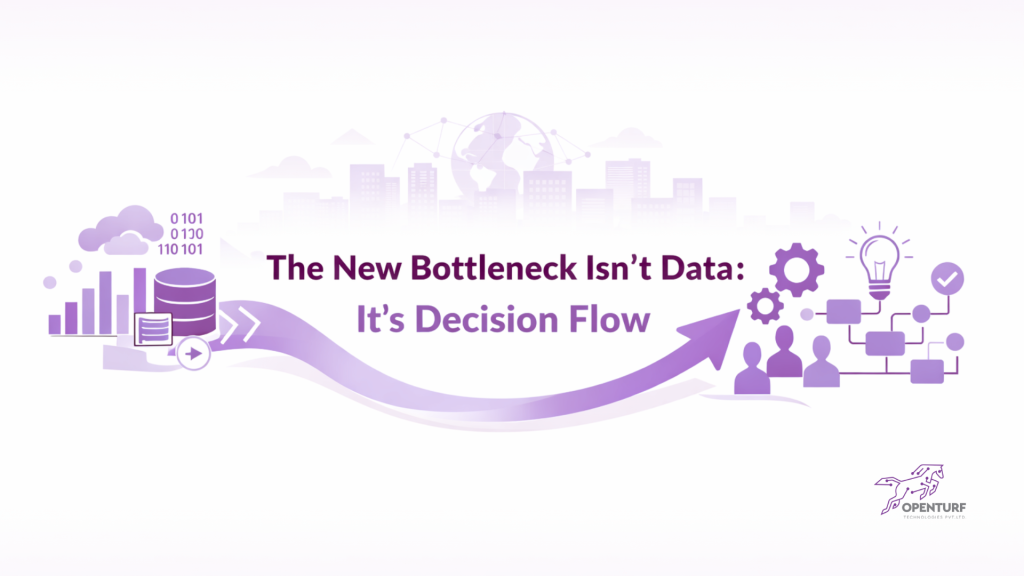
In the world of AI and business transformation, the common mantra for success has long been “more data, better outcomes.” But as organizations collect more data than ever before, a new constraint is emerging: decision flow: the ability to turn data and AI insights into fast, coherent, and collaborative decision processes. In 2026 and beyond, this has overtaken raw data as the critical barrier to real business impact.
Why Decision Flow Matters More Today
AI technologies from agentic automation to intelligent orchestration are no longer experimental add-ons. They’re becoming embedded into everyday workflows that span teams, systems, and strategic objectives. However, as systems grow more capable, the challenge isn’t just analyzing data; it’s how decisions are made on that basis, how they’re coordinated, and how teams trust and act on them in real time.
Decision flow influences every layer of a business:
- Operational agility: seamless transition from insight to action
- Cross-team alignment: shared understanding across functions
- Governance and accountability: decisions that are transparent, explainable, and auditable
The Limits of Data Without Flow
Many organizations have vast data infrastructures and analytics platforms, yet still struggle to act on insights quickly or consistently. That’s because data alone doesn’t make decisions people do, and machine insights must be woven into human workflows in a way that supports judgment and organizational context.
In 2026, the trend has moved toward AI systems that not only present insights but orchestrate decision steps:
- AI agents handling coordinated workflows
- Systems suggesting actions tied to business outcomes
- Decision intelligence platforms that contextualize insights for stakeholders
If the flow of decisions is disjointed with gaps between insights, approvals, and execution data remains underutilized.
How AI Is Shaping Better Decision Flow
Recent shifts illustrate how decision flow is becoming central to business competitiveness:
- AI-Directed Workflow Orchestration:
Next-gen systems automate across functions rather than in isolated tasks, reducing manual hand-offs and accelerating response times. - Strategic Integration of AI:
Leaders are embedding AI into strategic layers, where it can suggest choices, simulate outcomes, and act as a “co-decision maker.” This elevates AI beyond reporting into proactive operational planning. - Governance and Transparency:
AI decisions must now be explainable and traceable, particularly where outcomes impact compliance, safety, or customer trust.
Turning Insights into Action
As AI continues to drive transformation across industries, ignoring decision flow will stall progress. The future belongs to systems and teams that not only gather data but integrate it into seamless, accountable, and collaborative decision processes. Getting this right means fewer bottlenecks, faster outcomes, and sustainable competitive advantage.
Ready to turn your data into real decisions?
Explore how AI-led decision orchestration can streamline workflows, remove friction, and power outcomes across your organization.
